Citrus sinensis
Sweet orange
- Limonene-dominant; no meaningful chemotype variation
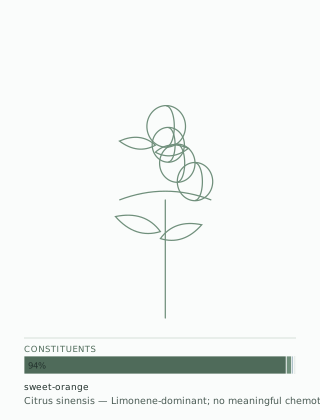
Sweet orange is the cheapest, the safest-looking and the most frequently spoiled oil on a home shelf. It is roughly 94% limonene, it is not…
By botanical part
4 published monographs fall under this facet. A facet here is not a taxonomy label but a safety clue: plants in the same family often share cross-reactivity risk, and the same botanical part often shares extraction and oxidation behaviour.
Sweet orange
Sweet orange is the cheapest, the safest-looking and the most frequently spoiled oil on a home shelf. It is roughly 94% limonene, it is not…
Lemon (cold-pressed)
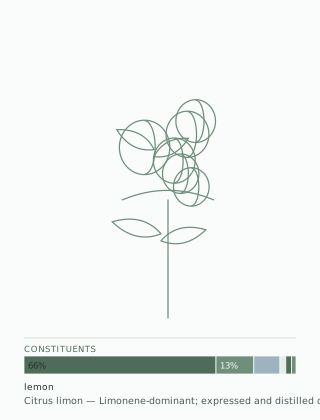
Cold-pressed lemon is the oil people are most surprised to find restricted. It is cheap, it is in every supermarket, it is in every "natural…
Bergamot (expressed)
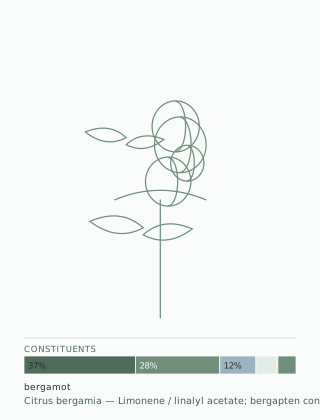
Bergamot is the most phototoxic oil in common household use, and it is also the one people are most reluctant to give up, because nothing else…
Grapefruit
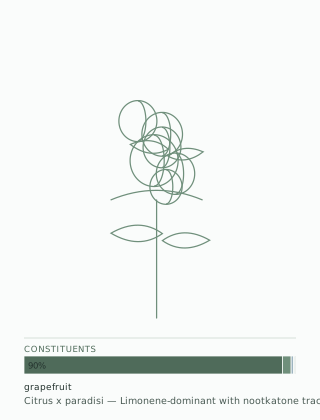
Grapefruit is phototoxic at roughly a third of bergamot's severity — which is still phototoxic. It is also 90% limonene, which makes it the…