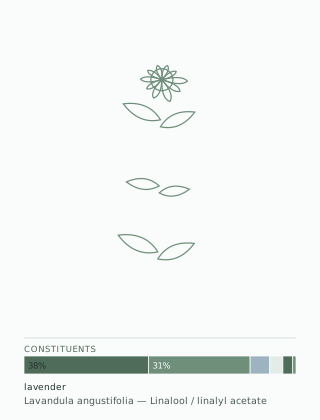
Lavandula angustifolia
True lavender
- Linalool / linalyl acetate
The most-sold essential oil in the world and the one most often used undiluted. True lavender has a camphor content of about 1% and a linalyl…
By family
8 published monographs fall under this facet. A facet here is not a taxonomy label but a safety clue: plants in the same family often share cross-reactivity risk, and the same botanical part often shares extraction and oxidation behaviour.
True lavender
The most-sold essential oil in the world and the one most often used undiluted. True lavender has a camphor content of about 1% and a linalyl…
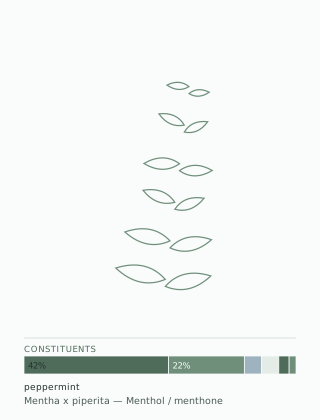
Peppermint
Peppermint is 42% menthol, and menthol is a drug in its own right — it activates the TRPM8 cold receptor directly. That is why it feels like it is…
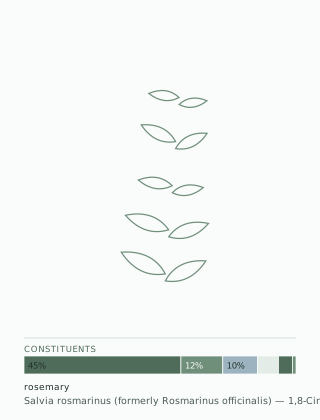
Rosemary (cineole chemotype)
Rosemary is the clearest example on this site of why chemotype is not a marketing word: CT cineole is 45% 1,8-cineole and 10% camphor, CT camphor…
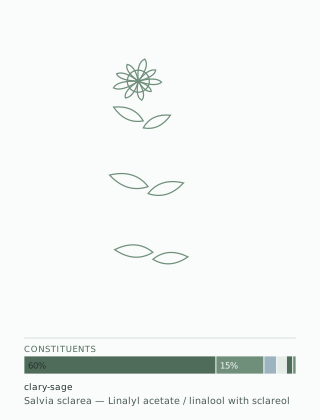
Clary sage
Clary sage is 60% linalyl acetate — the highest ester content on this site — and it is the only oil here with a documented interaction with…
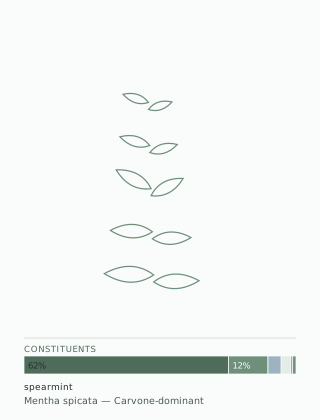
Spearmint
Spearmint is peppermint without the menthol: 62% carvone, roughly 0.5% menthol. That one difference is why it does not trigger the TRPM8 cold…
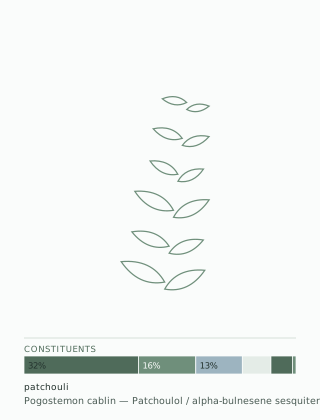
Patchouli
Patchouli is dried, fermented and then distilled, and that process — not any single molecule — is what produces the smell people either love or…
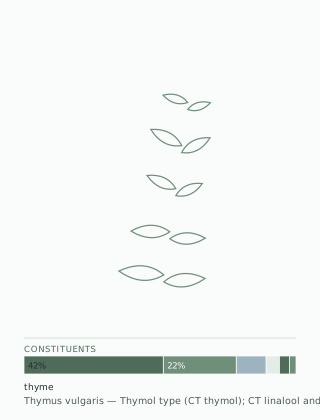
Thyme (thymol chemotype)
Thyme is the standard teaching example of why chemotype is a safety field and not a marketing one: CT thymol is 42% thymol with a 2% ceiling, CT…
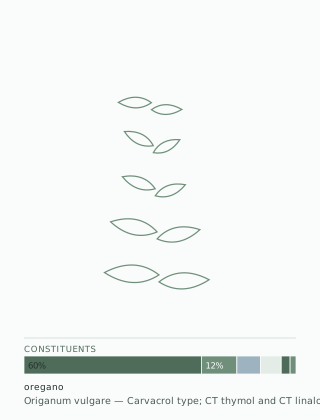
Oregano
Oregano is 60% carvacrol, the strongest phenol load on this site, and it is the oil most often recommended online at dilutions that would burn. It…